We have a brand new updated website! Click here to check it out!

Nebraska prisons see technology used to smuggle contraband

Don McCullough from Santa Rosa, CA, USA (commons.wikimedia.org)

LINCOLN, Neb. (AP) — Nebraska prison officials are keeping an eye on new technology being used to smuggle contraband into state prisons, including drones.

A crashed drone attached with bags of marijuana and tobacco was found at the Lincoln Correctional Center two months ago, the Lincoln Journal Star reported. The Justice Department reported last year an increasing number of attempts to use drones to smuggle contraband into federal prisons over the past five years.

The state prisons’ Centralized Intelligence Unit formed last year identifies and stays ahead of technology trends, said Christopher Connelly, agency intelligence administrator at the Nebraska Department of Correctional Services.

“Really, there are so many ways that contraband can come in, whether it comes in through the front entrance or a laundry cart or delivery truck,” said prisons spokeswoman Dawn-Renee Smith.

“Or dropped in by a drone,” Connelly said.

Prisons are refocusing efforts to locate and recover contraband, particularly cellphones, which has become a growing issue, said Smith. Inmates can use cellphones to track prison staff’s home addresses or transact business, Connelly said.

More than 165 cellphones were seized last year in the state’s 10 prison facilities, according to a Corrections Department report. Nearly 65 were found in 2016 and almost 80 in 2015.

Prisons are using new detection technology, Cellsense, to find cellphones that have been smuggled inside, said Smith. Trained dogs are also used.

While prisons have seen a spike in cellphones found within prison walls, drugs and alcohol still top the list of contraband found in Nebraska’s prisons.

In nearly 5 percent of cases in 2016, amphetamines, alcohol, cocaine and marijuana were detected in inmates’ systems across the penal system, according to the latest available department data.

Connelly said the growing number of ways that inmates can smuggle in contraband means that staff must be hyper-vigilant.

No injuries, damage reported in Nebraska prison disturbance

TECUMSEH, Neb. (AP) — Authorities say no injuries or damage have been reported following a brief disturbance at a prison in southeast Nebraska.

The Nebraska Correctional Services Department reports that 36 inmates had refused to return to their cells Saturday evening at the Tecumseh State Prison. It’s unclear what led to the rebellious acts.

But the department says the prisoners were back in their cells by the time a prison riot response team entered the maximum security housing unit.

The prison’s had a troubled history. Inmates took control of a portion of the prison and killed two fellow inmates in March 2015. In March last year, two more inmates were slain by other prisoners during rioting.

Mother of former prison guard accused of tossing evidence

LINCOLN, Neb. (AP) — The mother of a former Nebraska prison guard has been accused of throwing away evidence against her son.

Court records say 41-year-old Jacinda Miller, of Oshkosh, is charged with felony evidence tampering. She didn’t immediately return a call Monday from The Associated Press. Court records don’t list the name of an attorney who could comment for her.

The records say her son, 25-year-old Michael Miller, is accused of trying to smuggle synthetic marijuana and other contraband into the Nebraska State Penitentiary in Lincoln, where he worked until resigning in November.

A court document says he told investigators he’d asked his mother to go to his Lincoln apartment and get rid of the drugs. He says she told him after she bonded him out of jail that she’d disposed of them.

Parkland survivor shares prom night with Nebraska teen

LINCOLN, Neb. (AP) — A survivor of the Parkland, Florida, school shooting has shared a senior prom night to remember with a Nebraska girl.

Fidan Ibrahimova told the Lincoln Journal Star that she liked what Kyle Kashuv said after the Feb. 14 attack, citing his thoughts on preventing gun violence without infringing on gun rights.

So the Lincoln Southeast High School senior sent him a message asking how many retweets she would need to get him to be her prom date. His eventual reply: 5,000.

She tweeted a screenshot of their exchange, pleading for help in making her dream come true. Aided by a retweet by commentator Ben Shapiro, she soon passed the 5,000. People also donated enough money to pay for Kashuv’s flight from Florida, his hotel room, a limo, and dinner.

After their magical date Saturday, Ibrahimova tweeted: “It was a night I will remember forever.”

Man arrested after pot found in car after I-80 traffic stop

LINCOLN, Neb. (AP) — Authorities say a man was arrested after deputies found marijuana in his car after stopping it along Interstate 80 near Lincoln.

The Lancaster County Sheriff’s Office says a deputy pulled over the car around 11 a.m. Friday after seeing the driver fail to signal a lane change near the U.S. Highway 77 exit. The deputy reported smelling marijuana in the car, and a subsequent search turned up 114 pounds (52 kilograms) of pot and some cannabis edibles.

The man, who lives in Sioux City, Iowa, was arrested on suspicion of possession for sale and suspicion of other crimes. Court records don’t show that he’s been formally charged.

Lincoln school district aims to diversify teaching workforce

LINCOLN, Neb. (AP) — Lincoln’s school district is promoting diversity in Nebraska’s education workforce by encouraging its minority students to consider a career in teaching.

Lincoln Public Schools Multicultural Administrator Thomas Christie hosted an annual workshop Friday for about 60 students of different races to learn about becoming educators.

Some students who have participated in past workshops now teach at the district, where more than 5 percent of educators are people of color, Christie said.

The district has hired more than 70 people of color in the past five years.

About 33 percent of the district’s students are racial or ethnic minorities.

Recruiting and hiring minorities is challenging because there aren’t many students of color pursuing education degrees, Christie said. Those who do are in high demand, he said.

Nebraska would need to hire seven times more African-American and Native-American educators and 11 times more Hispanic educators to reflect the state’s current student population, according to Matt Blomstedt, state education commissioner.

The state Education Department has joined nine other states in an initiative aiming to revise state policies to create a more diversified workforce by 2020.

Encouraging educators from other states to move to Nebraska is also difficult, Christie said.

In 1997, Lincoln Public Schools convinced Jai Burks to move from Louisiana to Lincoln, where he teaches instrumental music at Park Middle School. He’s one of 45 black educators in the district.

“I figured if I could be an educator, I could bring along people who didn’t have the advantages I did,” Burks said at the Friday workshop. “I could bring them along through music.”

North Star High School Principal Vann Price is the only principal of color in the district.

She told students at the workshop, “Ten years from now I want one of you to be a principal at LPS.”

Arrest warrant issued in fatal March shooting of Lincoln man

LINCOLN, Neb. (AP) — Police say an arrest warrant for second-degree murder has been issued in connection with a fatal shooting in Lincoln last month.

Lincoln Police said Monday that investigators are searching for the suspect but won’t name him until after he is arrested.

Last week, police also arrested two 17-year-olds as accessories in connection with the March 26 shooting death of 22-year-old Edgar Union Jr.

Police have said Union was shot after a fight between two groups of people that included gang members.

Union was the father of five girls, including triplets.

Longest-serving death-row inmate in Nebraska denied pardon

Carey Dean Moore

LINCOLN, Neb. (AP) — Nebraska’s longest-serving death-row inmate has been denied a pardon hearing after he claimed officials are too “lazy or incompetent” to execute him.

The Nebraska Board of Pardons voted 3-0 on Tuesday to reject Carey Dean Moore’s request. Moore was sentenced to death in 1980 for murdering two cab drivers in Omaha.

Secretary of State John Gale, who serves on the board, says petitions from convicted murderers are routinely denied.

Moore unsuccessfully appealed his sentence several times but has made no new attempts in over 10 years. He says he doesn’t believe state officials actually want to execute him.

Nebraska hasn’t executed anyone in 21 years. Attorney General Doug Peterson recently petitioned the state Supreme Court to issue a death warrant for Moore.

Nebraska doesn’t extend Medicaid benefits to elderly nuns

OMAHA, Neb. (AP) — A vow of poverty by more than 20 elderly nuns isn’t enough to qualify for Medicaid in Nebraska.

The state cut Medicaid benefits earlier this year for the Sisters of Mercy, one of the oldest Roman Catholic religious orders in Nebraska, the Omaha World-Herald reported.

The nuns are appealing the decision through the state Department of Health and Human Services, which administers the federal health care program to low-income and disabled residents. Some of the 21 affected nuns have received restored benefits.

The Sisters of Mercy manage a shrinking, aging population and growing retirement obligations. The group applied for Medicaid for elderly nuns in 2016 after selling property, reducing staff and making other cuts.

Some state senators backed a bill guaranteeing the sisters’ benefits, but the legislation never made it out of committee.

Some state officials suggested the sisters tap into currently restricted patrimony funds. Patrimony is an individual fund often distributed charitably according to a sister’s wishes after her death. Neither a sister nor the organization can access the fund because of the vow of poverty.

A nun would have to appeal to the Vatican and renounce her sacred vows to use patrimony funds for health care.

The state fears that expanding Medicaid to cover the Sisters of Mercy could prove costly if other people also qualify. Ignoring the sisters’ patrimony requires accounting for tithing in income qualification reviews of Medicaid recipients of all faiths, state officials said. Doing so could cost Nebraska $3 million annually by adding more than 300 Medicaid recipients by 2020.

Sen. Sara Howard of Omaha disagreed, saying that relatively few people besides the sisters would qualify under the proposed bill’s terms.

The sisters are hopeful they can make their case because the group in other states has received Medicaid.

Ricketts signs 3 bills to avoid looming tax increases

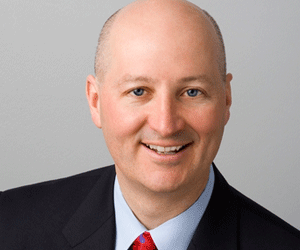
Gov. Pete Ricketts

LINCOLN, Neb. (AP) — Nebraska Gov. Pete Ricketts signed three tax measures Tuesday designed to shield residents from state tax increases triggered by inflation and the new federal tax law.

Ricketts touted the measures as important accomplishments in this year’s session, but expressed disappointment that lawmakers didn’t approve his property and corporate tax package.

“It really was disappointing to see the Legislature not be able to pass a property tax bill,” Ricketts said, adding that he would continue to work on the legislation for next year’s session.

The governor’s proposal sank in part because some senators offered competing bills. One measure would have lowered property taxes by raising the state’s sales tax, increasing cigarette taxes and eliminating sales-tax exemptions. Another would have cost the state more than $1 billion a year — roughly one-fourth of Nebraska’s annual budget — which the governor argued was unsustainable.

Critics of Ricketts’ plan said it would have taken too long to provide major benefits for farmers, who have seen their property taxes soar in tandem with land values. Others objected to using the state’s emergency cash reserve to pay for the first year of tax cuts, and noted that supporters hadn’t specified how they would pay for it in the future.

Ricketts approved the new measures as lawmakers prepare to convene Wednesday for the last day of this year’s session.

One measure will adjust the state’s Social Security income tax limits automatically to keep pace with inflation, starting in 2020.

The law by Sen. Brett Lindstrom, of Omaha, seeks to address cost-of-living increases that can bump taxpayers into a higher bracket, where they end up paying more in taxes. It won’t go into effect until 2020, and would cost the state an estimated $1.3 million in lost revenue by fiscal year 2021.

Lawmakers passed a similar law for individual income taxes in 2014. Lindstrom said it would make it easier for seniors to remain in Nebraska after retirement.

Another law by Sen. Jim Smith, of Papillion, will prevent the new U.S. tax law from triggering an automatic tax increase in Nebraska. The bill seeks to neutralize most of the effects of the law approved by congressional Republicans and President Donald Trump.

Nebraska’s tax system is changing because lawmakers have connected many parts of it to the federal tax code, leading to automatic state-level shifts when federal policy changes.

The third new law, also by Smith, will adjust Nebraska’s personal property tax so that farmers and businesses are held harmless on taxes they owe for business equipment. Under the federal tax law, many would have had to pay more to the state.

Both bills “are absolutely critical to keeping Nebraskans whole,” Smith said.

Copyright Eagle Radio | FCC Public Files | EEO Public File